Steady

Practice for hard conversations

Walk into hard conversations steady.

You have gone over it in the shower all week. Steady is where you say it out loud, like you would in real life, to someone who answers back, and find out what your words actually did.

iPhone and Android · Voice or text · No account · 7 days free

Steady's starting check: what you said you do, next to what you actually did.Steady in warm cream: today's practice on the Home screen.A practice conversation: Jess is open but starting to close up, mid-sentence.Learn: twelve short courses, each with reading, practice and a test.Progress: what has changed since your starting check, and the blind spots closing.

The gap

You were promoted for being good at the job. Nobody trained you for this part of it.

There is no shortage of advice on hard conversations. What is missing is somewhere to have one before it counts: spoken, with a person who reacts, where getting it wrong costs nothing.

The toolkit

Seven parts, and you only do one at a time

The research on training managers for hard conversations keeps coming back to the same seven things. Steady is all seven, on a phone, for one person.

Step 01

Know where you actually stand

Eight questions about how you handle these conversations, then a five-minute practice picked for your role. Your results put what you said about yourself next to what you actually did, including blind spots you would not have spotted.

Why it works: the research ›
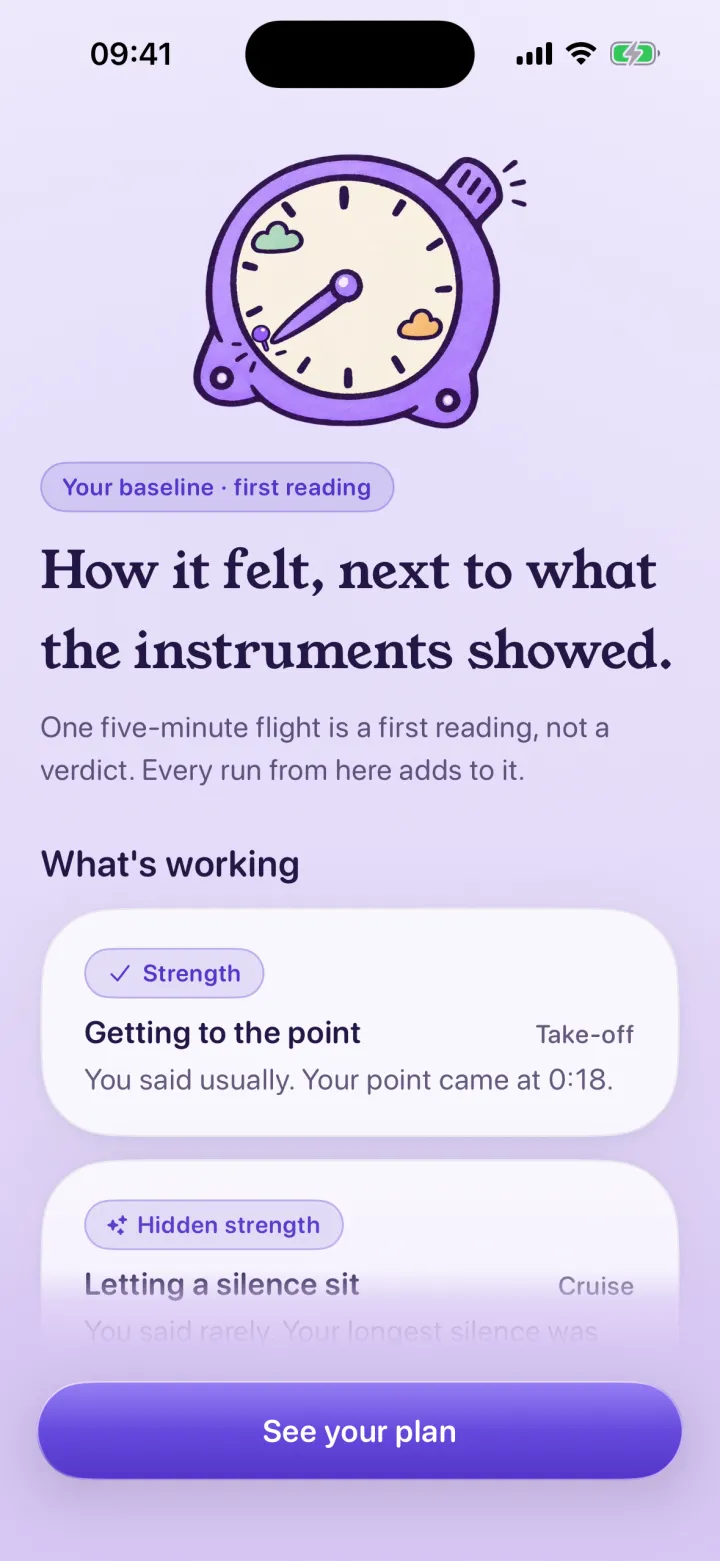
Your starting check: what's working, and what you might not be seeing.

Step 02

A structure you can lean on under pressure

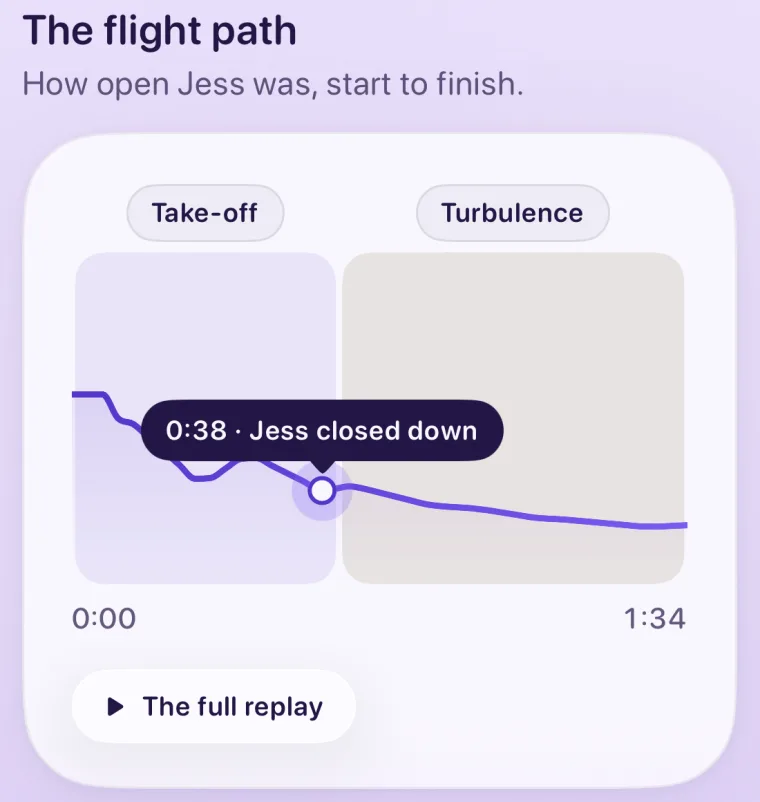
Prepare, open, listen, stay on point, agree. Every practice gets feedback on each of the five steps, in words, never a score, based on what you actually did rather than whether you matched a template.

Why it works: the research ›
Your results: how open Jess was through the conversation, step by step.

Step 03

Make it safe to be honest

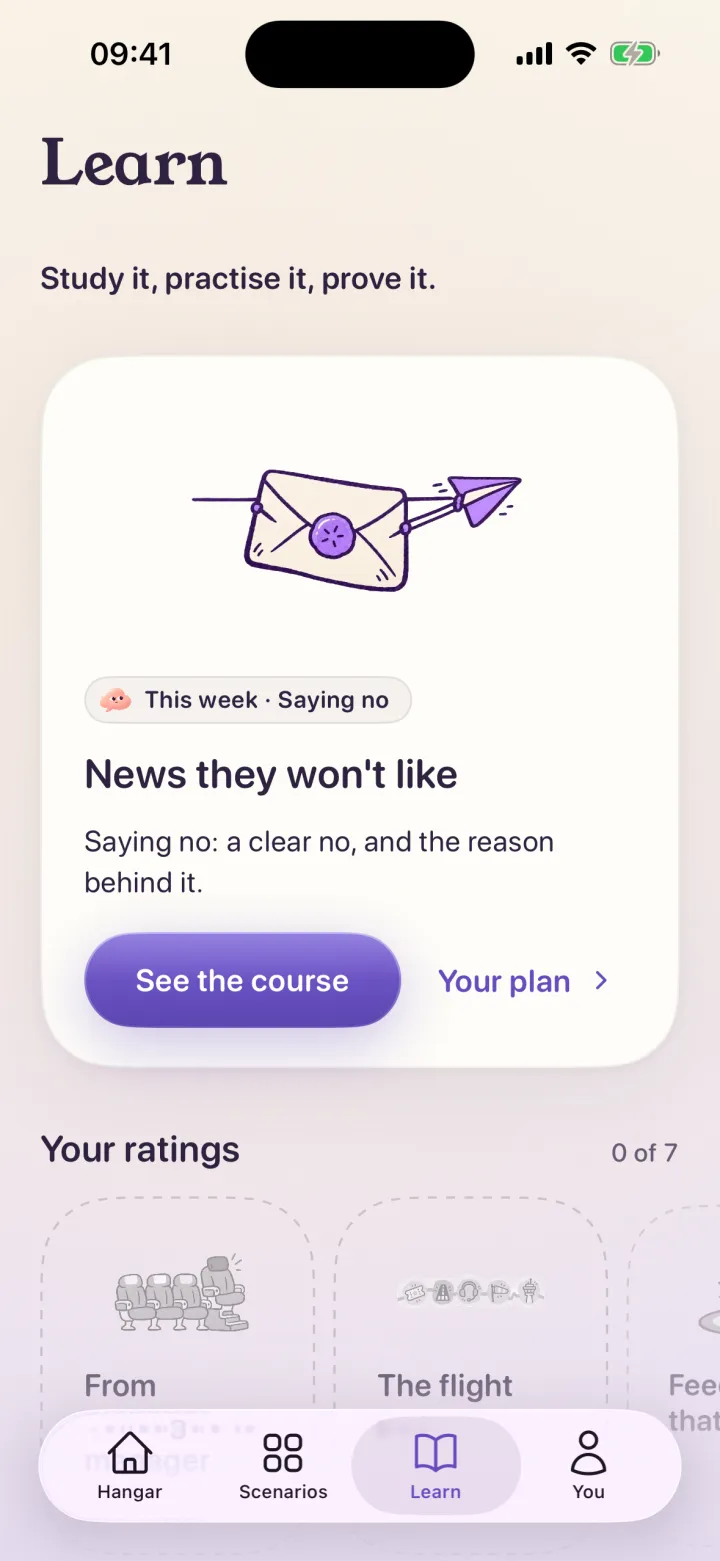
No structure survives a conversation the other person does not feel safe in. One of twelve short courses is about exactly that: invite their view, stay calm when challenged, separate the problem from the person. Read, practise, then pass a short test.

Why it works: the research ›
Learn: twelve short courses, each with reading, practice and a test.

Step 04

Speak it, to someone who pushes back

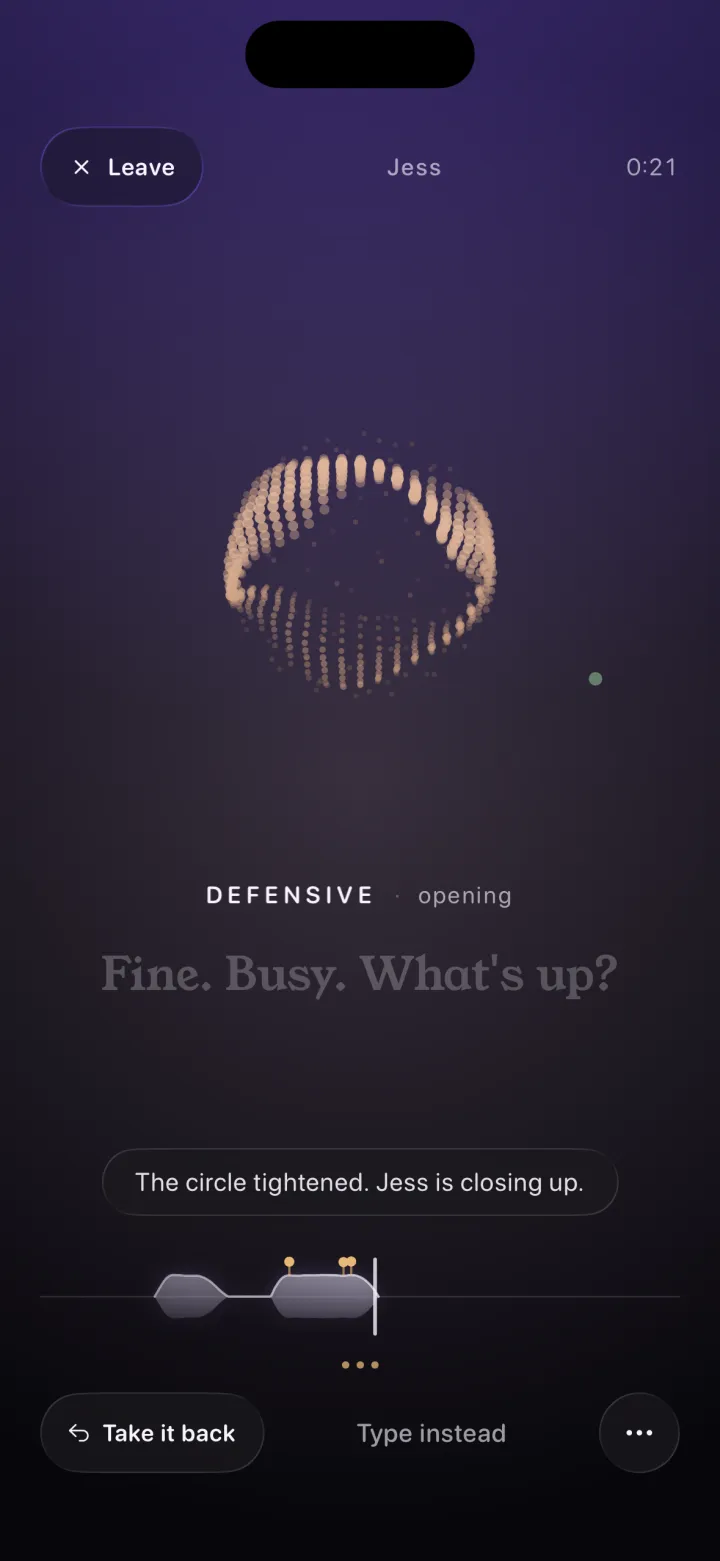
You speak. She answers in a real voice, in the moment, and she holds her position. Her state is drawn above her and moves while you talk, so you can see how a sentence is taken while you are still saying it.

Why it works: the research ›

A practice conversation: Jess, defensive, mid-conversation.

Step 05

Keep it sharp, not a one-off

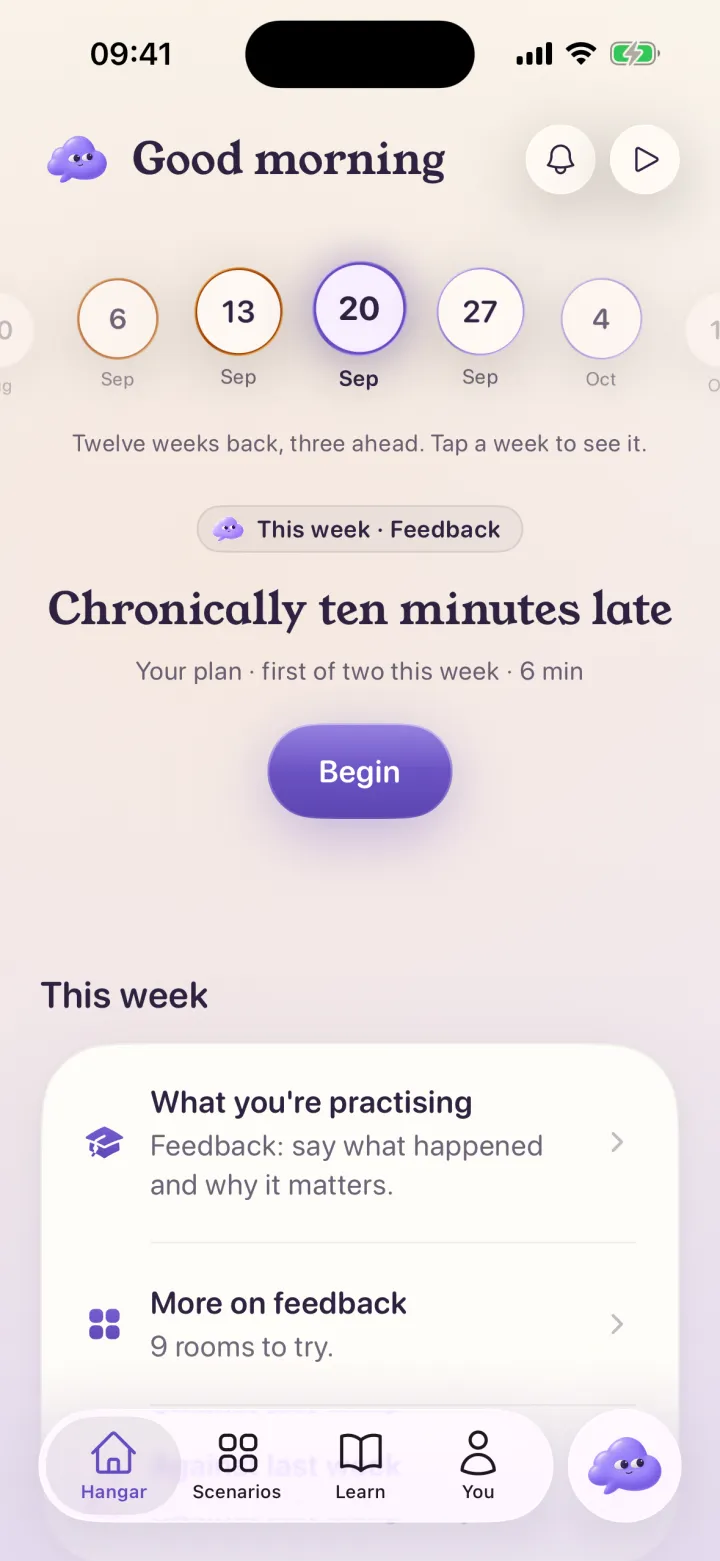
A single workshop fades within weeks. Steady works a week at a time: one topic a week (feedback, boundaries or saying no) and two short practices on it, on whichever days suit you. Every six weeks a progress check shows what has changed. When you have a real conversation coming up, Steady helps you prepare for it.

Why it works: the research ›

Home: this week's topic, and your next practice.

Step 06

Built for the role you are in

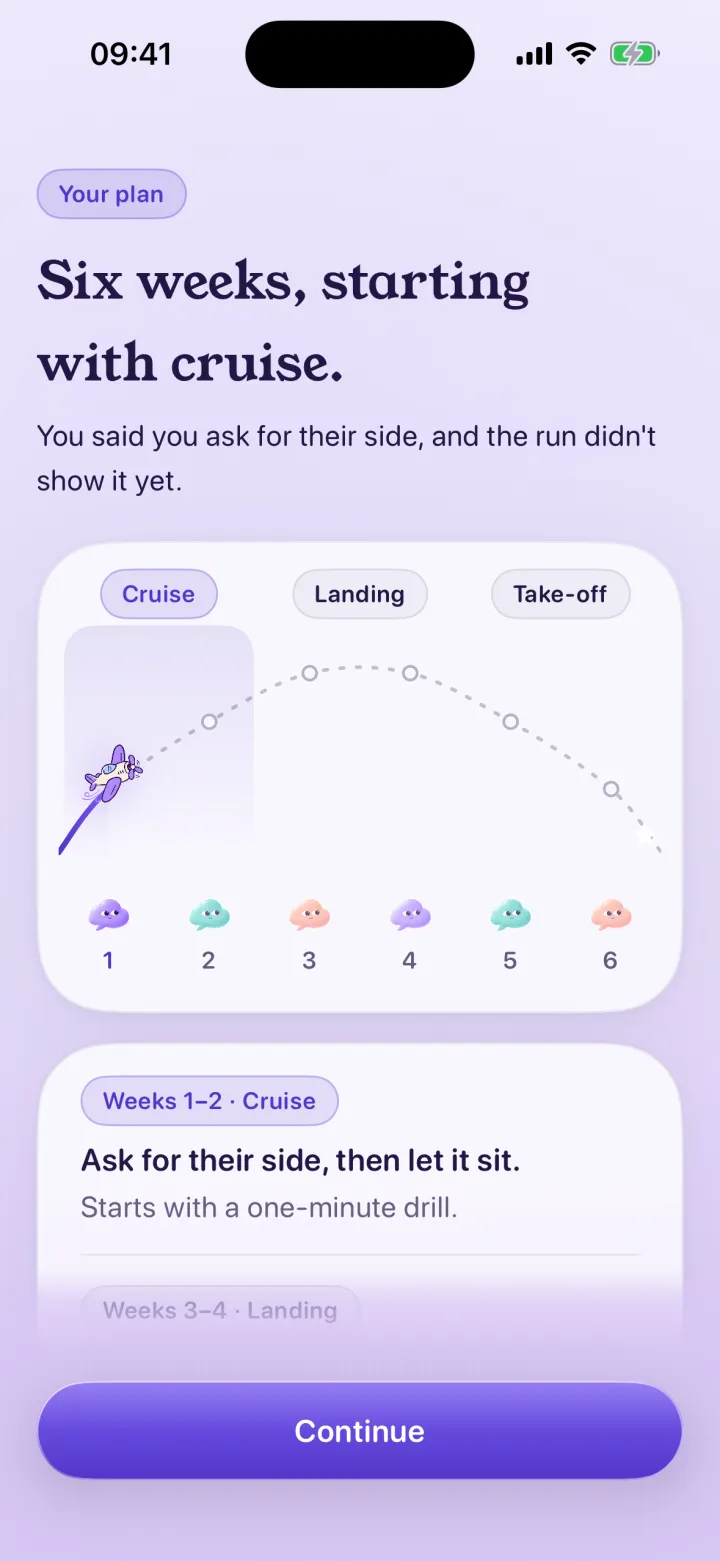
A first-time manager on her first performance problem needs different practice from a director on her fourth restructure. Your plan is six weeks, built from your starting check and the conversations people in your role find hardest. The one you have been avoiding comes first, you can swap a week's topic when something else is more pressing, and every practice is written for the field you work in.

Why it works: the research ›

Your plan: six weeks, starting with listening.

Step 07

See what actually changed

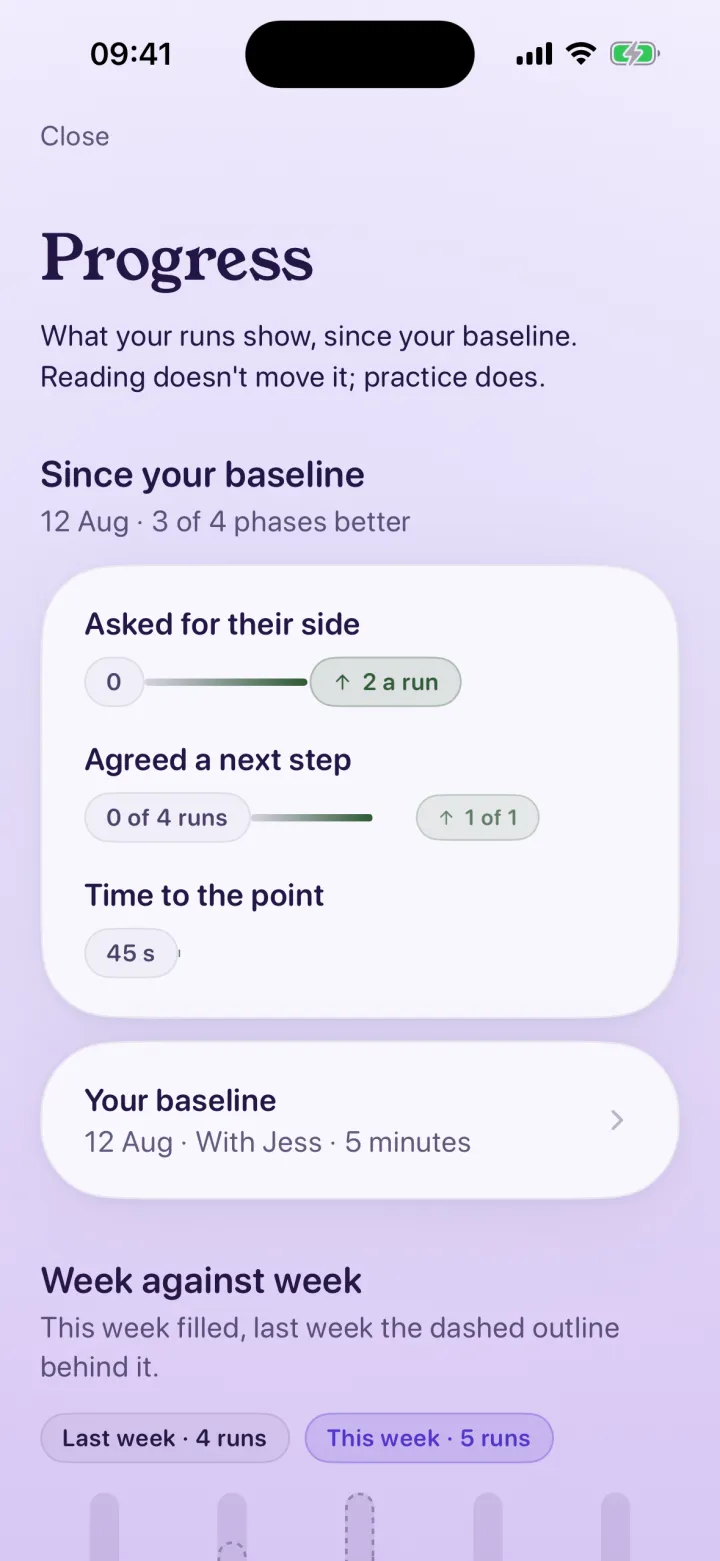
Not attendance, and not a completion rate. Progress comes from your practices: how long you take to get to the point, how often you soften what you say, how long you can hold a silence, and which blind spots have closed since your starting check.

Why it works: the research ›
Progress: what has changed since your starting check, and the blind spots closing.

The five steps

Five steps, every conversation, every practice

  • 01

    Prepare

    Know three things before you go in.

  • 02

    Opening

    Say why you're here.

  • 03

    Listening

    Listen more than you talk.

  • 04

    Staying on point

    Stay kind, stay on the point.

  • 05

    Next steps

    Agree what happens next.

What Steady won’t do

Four ways this usually goes wrong

It won't be a one-off

Skills built in a single session do not survive a real, emotional conversation. Steady is a six-week plan, a rhythm, and a check that comes round again.

It won't hand you a script

Rigid scripts break the moment the other person goes off-book. The words stay yours. What comes back is what yours did.

It won't pretend culture doesn't exist

Candour inside a blame-heavy culture sets you up to fail. Steady says so, and is clear about what it cannot fix.

It won't stop at the run

Without follow-up, training decays. Steady prepares the real conversation with you, then asks how it went.

The evidence

Explore our toolkit, and why each part works

Each of the seven tools stands on research about how managers actually get better at hard conversations. The studies are linked and labelled by how strong they are, including where the evidence stops.

See the research

The practice conversations

22 conversations you have already been dreading

Each one is a person with a history, a position and a reason to resist. Choose how hard it goes, from gentle to realistic to tough, and the other person will surprise you in ways you won't see coming.

Receptive
Listening, and calm.
Engaged
In it, with you, and worked up.
Guarded
Shut down, holding it together.
Defensive
Shut down, and hot.
Withdrawn
Stopped engaging.
  • Feedback

    The friend who was your peer last month

    Their work has slipped since you got promoted. You had drinks with them on Friday.

    Jess is on the other side of this.

  • Feedback

    The one who was passed over for your job

    Her work is technically fine and she has stopped bringing anything else.

    Rachel is on the other side of this.

  • Feedback

    Chronically ten minutes late

    Six weeks of it. Everyone has noticed. Your silence is now part of the problem.

    Callum is on the other side of this.

  • Feedback

    Brilliant and talks over everyone

    Your strongest performer is making two quieter people invisible.

    Anya is on the other side of this.

  • Feedback

    The client presentation that fell flat

    He thinks it went well. It did not.

    Dominic is on the other side of this.

  • Feedback

    “When I was doing this job…”

    He undermines you gently, in front of the team, in a way that is impossible to point at.

    Brian is on the other side of this.

  • Feedback

    Two of your team have stopped speaking

    Three weeks of silence between them. You're seeing one of them first.

    Claire is on the other side of this.

  • Feedback

    Not himself lately

    Twelve years the steady one. For the last month, he hasn't been.

    Martin is on the other side of this.

  • Feedback

    “Where is this going for me?”

    She asked last week. You said you'd come back to her properly.

    Priya is on the other side of this.

  • Boundaries

    11pm Slack

    He messages at all hours and expects an instant reply, because you always used to give one.

    Tom is on the other side of this.

  • Boundaries

    They want to be your friend

    Oversharing, drinks invitations, and reading your management as coldness.

    Sophie is on the other side of this.

  • Boundaries

    Going around you

    He takes things straight to your boss, and copies you in afterwards.

    Nathan is on the other side of this.

  • Boundaries

    Friday 5pm, again

    Your own boss drops work on you at the end of every week. Managing up is a boundary too.

    Meera is on the other side of this.

  • Boundaries

    The peer manager who wants your best engineer

    For “just two weeks.”

    Jonah is on the other side of this.

  • Boundaries

    “I can't take any more on”

    Your most dependable person said no before you'd asked.

    Tariq is on the other side of this.

  • Saying no

    No to your boss

    Declining a project you cannot take, with reasons, without damaging the relationship.

    Douglas is on the other side of this.

  • Saying no

    No promotion this cycle

    She thinks she has earned it. The budget does not exist and it is not close.

    Leila is on the other side of this.

  • Saying no

    No to the flexible working request

    You want to say yes. You cannot.

    Hannah is on the other side of this.

  • Saying no

    Carrying a decision you disagree with

    You didn't decide it. You have to deliver it, and not throw your own leadership under the bus.

    Ade is on the other side of this.

  • Saying no

    Letting someone go

    The improvement plan has run its course. Today you tell him it's over.

    Ryan is on the other side of this.

  • Saying no

    Her role is changing

    Her team is moving under someone else. Tomorrow it's announced. Today she hears it from you.

    Nadia is on the other side of this.

  • Saying no

    “Is AI coming for my job?”

    The demo said it frees up 30% of the team's time. She wants to know whose.

    Grace is on the other side of this.

And none of them is the one you are having on Thursday

Describe your real conversation. Who the other person is, what has happened, how you expect them to react. Steady sets up a practice with someone who reacts the way you said they would.

Your field

Every practice, written for where you work

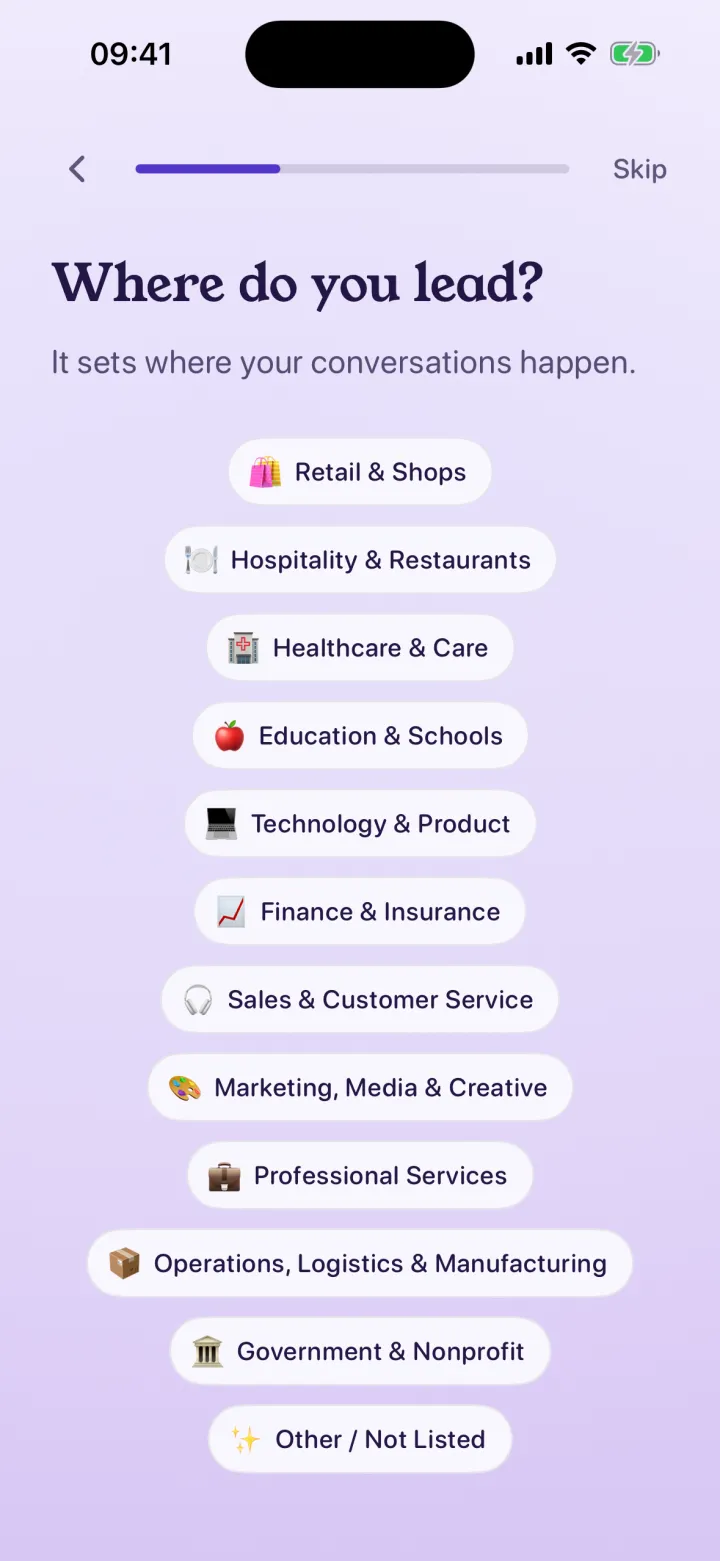
A ward manager should not have to practise with sprint reviews. Tell Steady where you work and all 22 practice conversations are rewritten for it: the handover, the Saturday floor walk, the pre-service briefing, the cover lesson. The person, their history and the way they push back stay exactly the same.

Ten of the fields also get eight practice conversations no other field has: the agency nurse and the handover sheet, the shift swapped on WhatsApp, the tip pool, the pitch that needs your Saturday.

  • Retail & Shops
  • Hospitality & Restaurants
  • Healthcare & Care
  • Education & Schools
  • Technology & Product
  • Finance & Insurance
  • Sales & Customer Service
  • Marketing, Media & Creative
  • Professional Services
  • Operations, Logistics & Manufacturing
  • Government & Nonprofit
  • Other / Not Listed
  • The peer manager who wants your best nurseHealthcare
  • The peer manager who wants your best chefHospitality
  • The peer manager who wants your best teacherEducation
  • 11pm WhatsAppRetail
  • 11pm TeamsFinance
Where do you lead? Twelve fields to choose from, from retail to government.

Privacy

You are naming real people. So:

Read the privacy policy
  • Your audio is never saved. It is processed as you speak and then it is gone.
  • Your transcripts stay on this phone, encrypted.
  • Real names never leave this phone. A name you type is replaced with a placeholder before anything is sent.
  • There is no account, so there is nothing of yours on a server to lose.

Pricing

One gate, and everything is behind it

There is no crippled free tier. Seven days, everything open, and then you decide.

£59.99

a year · £5.00 a month · save 44%

Free for 7 days, then £59.99 a year. Cancel any time in Settings. Your own currency is shown in the app before you confirm.

What Steady Pro is

  • Your starting check

    Where you stand, and the blind spots you might not see.

  • Every practice conversation for your field, an hour a week

    Feedback, boundaries, saying no. Practise once, or eleven times.

  • Your plan and your Progress

    Six weeks for your role, and what has changed since your starting check.

  • Step-by-step feedback and progress checks

    Feedback on the five steps after every practice. A progress check every six weeks.

  • Bring your own situation

    Describe the conversation you actually have coming up. Steady sets up a practice for it.

  • Take it back, compare practices, quick practice

    Take back a line and say it differently. Put two practices side by side.

The self-check and the whole library are free, with or without Pro.

Running this for a team?

Steady is built for one manager and one phone. If you run a management programme and want this practice inside it, say hello. We are working out what the team version should be.

hello@steadyyy.com

Questions

The ones people actually ask

Eight questions about how you handle these conversations, then a five-minute practice picked for your role. Your results put your own answers next to what you actually did: what is working, what you might not be seeing, and where to start. One five-minute practice is a first look, not a verdict, and every practice after it adds to the picture.

No. There is no correct sentence and Steady never hands you one. It gives you a person who reacts to what you actually said, and afterwards it tells you what your own behaviour did: where you softened what you said, how long you took to get to the point, what happened right after you said “but.” The words stay yours.

It works best spoken, because speaking is the hard part. But you can type instead at any point, even halfway through a practice, if you would rather write.

First-time and newly promoted managers, most often people now managing colleagues who used to be their peers. If you have gone over a conversation in the shower more than twice, Steady is for you.

Yes. Tell Steady where you work and every practice is rewritten for it: 11 fields, from retail and hospitality to healthcare, schools, and operations. The person, their history and how they react stay the same; the ward, the shop floor or the kitchen is yours.

Your audio is never saved. It is processed as you speak and then it is gone. Transcripts stay on the phone, encrypted. When you name a real colleague, that name is replaced with a placeholder before anything is sent. There is no account, and one button in the You tab deletes all of it.

The self-check and the whole library are free. Everything else (the starting check, the practice conversations, step-by-step feedback, your plan, Progress and the checks) is 7 days free, then £59.99 a year or £8.99 a month. Cancel any time in Settings.

Steady is practice for work conversations, not therapy, not HR advice and not crisis support. If a practice turns towards something the app should not be handling, it stops and points you at people who can.

From the blog

The reading behind the app

Visit the blog

The conversation is on Thursday.

Have it tonight, where it costs nothing.

7 days free · Cancel any time in Settings